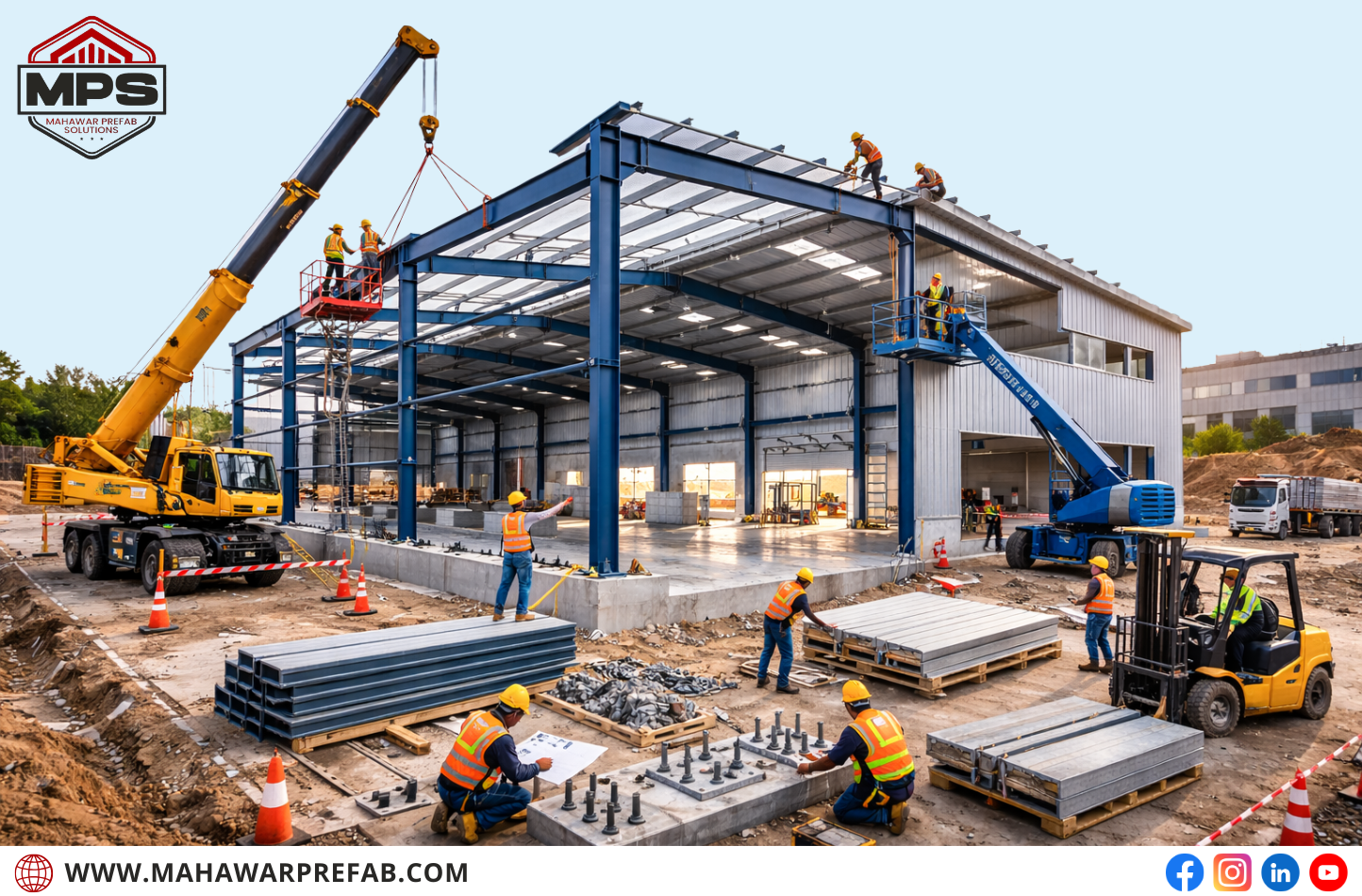
The rapid adoption of Pre-Engineered Building Structures across industrial, commercial, and infrastructure sectors has transformed modern construction. These advanced prefabricated steel buildings offer speed, cost efficiency, and structural reliability. However, their performance and longevity depend heavily on two critical aspects: strict safety compliance and a systematic erection process.
This article explains the complete safety protocols and erection procedures followed in high-quality PEB projects and highlights how Mahawar Prefab Solutions ensures safe, compliant, and precision-engineered installations.
Why Safety is Critical in Pre-Engineered Building Construction
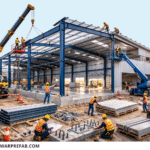
Unlike conventional construction, pre-engineered building structures involve heavy steel components, high-elevation assembly, and precision bolting. Even minor lapses can cause structural misalignment, accidents, or long-term performance issues.
Key risk factors in prefabricated steel buildings erection include:
- Heavy steel member lifting
- Working at heights
- Crane operations
- Bolt tightening and alignment
- Weather exposure during installation
Therefore, safety is not optional — it is an engineering requirement.
Standard Safety Guidelines for PEB Erection
Professional PEB companies follow internationally accepted safety norms during installation of pre-engineered building structures.
1. Site Safety Planning and Risk Assessment
Before erection begins, a detailed site safety plan is prepared including:
- Hazard identification
- Crane positioning plan
- Material storage layout
- Worker movement zones
- Emergency evacuation routes
Mahawar Prefab Solutions conducts pre-erection safety briefings to ensure all personnel understand site risks and procedures.
-
Personal Protective Equipment (PPE) Compliance
Workers installing prefabricated steel buildings must use certified PPE:
- Safety helmets
- Full-body harness with lifeline
- Anti-skid safety shoes
- Gloves and eye protection
- Reflective jackets
Strict PPE enforcement significantly reduces injuries during high-level steel assembly.
-
Safe Material Handling and Lifting Practices
Steel components in pre-engineered building structures are lifted using cranes and rigging systems. Safety measures include:
- Certified lifting slings and shackles
- Load capacity verification
- Controlled lifting signals
- Wind speed monitoring
- No-load-over-personnel policy
Mahawar Prefab Solutions ensures all lifting equipment is inspected before erection operations.
Step-by-Step Erection Process in Pre-Engineered Buildings
A structured erection sequence ensures structural accuracy, safety, and durability in prefabricated steel buildings.
Step 1: Foundation Readiness and Anchor Bolt Verification
The erection of pre-engineered building structures begins with foundation inspection:
- Anchor bolt position and level check
- Foundation elevation verification
- Grouting readiness
- Base plate alignment test
Incorrect anchor placement can cause structural deviation, so precision inspection is essential.
Step 2: Primary Frame Installation
Primary members (columns and rafters) form the structural skeleton of prefabricated steel buildings.
Erection sequence:
- Column lifting and temporary bracing
- Rafter placement using cranes
- High-strength bolting at joints
- Verticality and alignment check
Temporary supports are maintained until the frame stabilizes.
Step 3: Secondary Members and Bracing System
After primary frames, secondary members are installed:
- Purlins
- Girts
- Eave struts
- Sag rods
- Bracing cables
These components provide lateral stability to pre-engineered building structures and prevent frame movement.
Step 4: Roof and Wall Panel Installation
Cladding installation completes the enclosure of prefabricated steel buildings.
Safety-focused methods:
- Roof panel lifting platforms
- Edge protection systems
- Fall-arrest lines
- Sequential fixing from eave to ridge
Proper panel alignment ensures weather tightness and structural integrity.
Step 5: Final Alignment, Torqueing, and Inspection
The last stage ensures long-term performance of pre-engineered building structures:
- Bolt torque verification
- Frame plumb check
- Bracing tension adjustment
- Sealant and flashing inspection
- Safety audit
Mahawar Prefab Solutions performs multi-stage quality checks before project handover.
Common Safety Mistakes in PEB Erection (and How Professionals Avoid Them)
Poorly managed prefabricated steel buildings projects often face issues such as:
- Missing bracing during erection
- Improper bolt tightening
- Unsafe roof walking
- Uncontrolled crane lifting
- Skipping alignment checks
Experienced PEB contractors follow engineered erection drawings and safety SOPs to eliminate these risks.
How Mahawar Prefab Solutions Ensures Safe PEB Installation
Mahawar Prefab Solutions follows a safety-first engineering approach in all pre-engineered building structures projects:
- Engineered erection methodology
- Trained and certified erection teams
- PPE-compliant workforce
- Crane and rigging inspection protocols
- Multi-level quality and safety audits
- Strict adherence to design drawings
This commitment ensures every prefabricated steel building delivered is structurally accurate, durable, and safe.
Safety and Precision Define Successful PEB Projects
The strength and durability of pre-engineered building structures depend not only on design and manufacturing but also on safe and systematic erection practices. Professional installation ensures structural stability, worker safety, and also long-term building performance.
Choosing an experienced and safety-compliant PEB contractor like Mahawar Prefab Solutions guarantees that your prefabricated steel buildings are erected with engineering precision and industry-standard safety practices.