
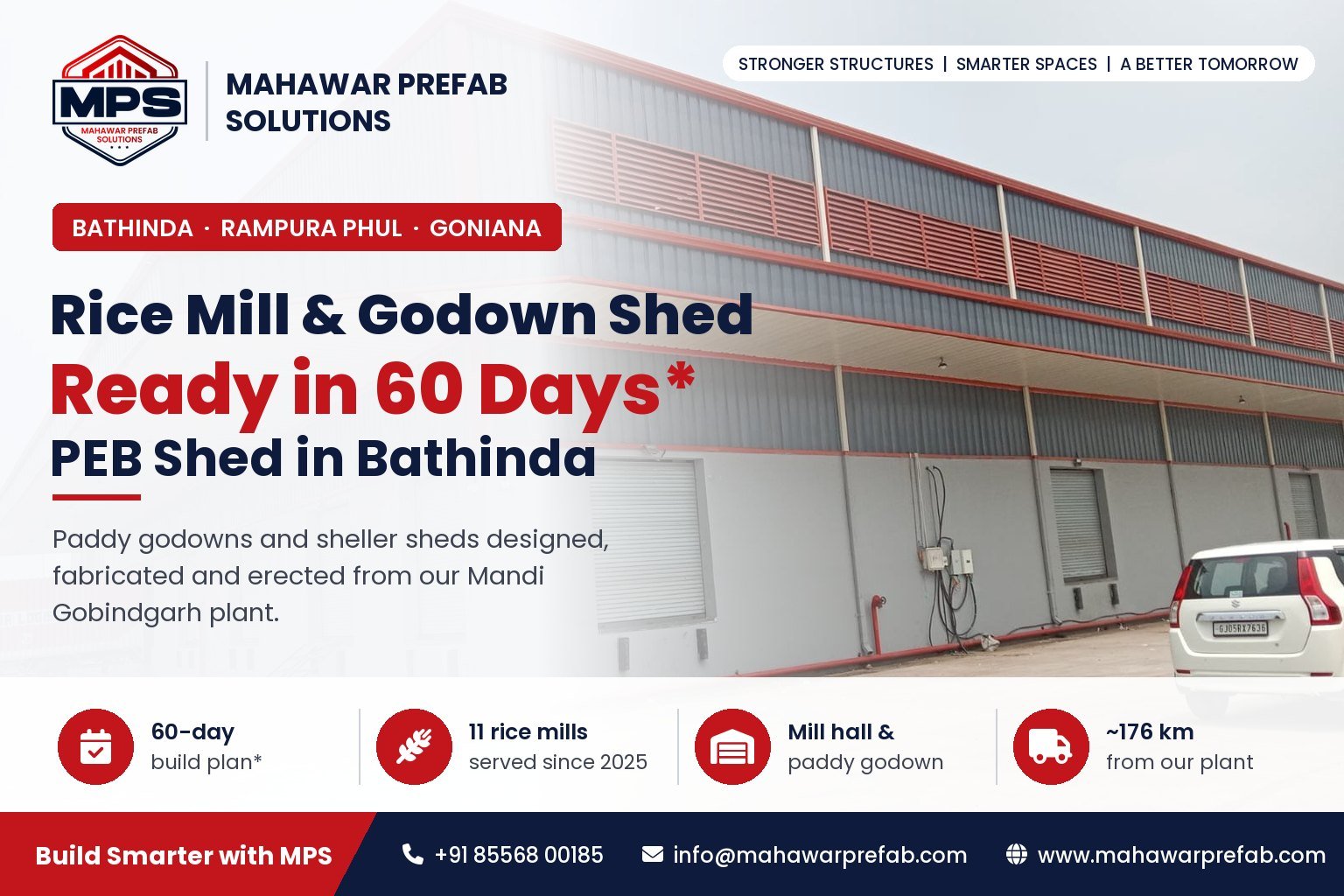
PEB rice mill & godown sheds · Bathinda
Pre-engineered steel (PEB) sheds for rice mills, shellers and paddy godowns in Bathinda district: designed, fabricated and erected by Mahawar Prefab Solutions from our plant in Mandi Gobindgarh, about 176 km away.
- Goniana Mandi
- Talwandi Sabo
- Rampura Phul
- Rama Mandi
- Maur Mandi
- Bhucho Mandi
- Sangat, Nathana and Bhagta Bhaika
- Bathinda city industrial areas
Rice mills we have served across Punjab
Near Bathinda: mills in neighbouring Barnala district
More rice mills we have served (2025 to date)
Want to see a shed like yours? Ask us and we will share photos or, with the mill owner’s permission, arrange a visit.
What we build for rice mills in Bathinda
Rice mill and sheller sheds
A milling hall needs open floor space for the machine line, height for elevators and dryers, and good air movement to clear dust and heat. We design the frame around your machinery layout.
- Wide clear spans, so columns do not block the machine line
- Eave height planned for elevators, cleaners and dryers
- Ridge monitor, turbo or louvre ventilation for dust and heat
- Mezzanine platforms and crane-beam provision for maintenance, if needed
- Insulated (pre-insulated) roofing option where heat matters
- Wide gates for trucks and tractor-trolleys
The sheds a complete rice mill needs
- Main mill hall for the sheller, sorter and grader line
- Fully enclosed husk shed with a roof vent: CPCB guidelines ask for husk to be blown and stored only inside a closed enclosure, and 1 tonne of paddy gives about 220 kg of husk, which takes 2-2.5 cubic metres
- Closed bran store
- Paddy godown and milled-rice godown
- Boiler ash shed, if you parboil
Source: CPCB guidelines for rice mills (2012). Punjab’s binding siting rules are issued by the Punjab Pollution Control Board; check them for your plot.
Paddy and grain godowns
A godown earns money from stacking space. Fewer columns and a taller eave mean more bags per sq ft and easier truck movement.
- Clear-span or wide multi-span frames for maximum stacking area
- Eave height planned for your stack height
- Raised plinth, ramps and damp-proofing (civil work) planned with the steel design
- Ventilators and translucent sheets for daylight and air
- Gutters and downpipes sized for monsoon rain
- Rodent-resistant detailing at doors and wall bottoms
Building to FCI godown dimensions
| Item | FCI standard 5,000 MT conventional godown |
|---|---|
| Width | 21.80 m centre to centre (125.55 m long) |
| Plinth | 0.80 m above ground |
| Height | 5.60 m road-fed, 6.35 m rail-fed |
| Loading platforms | 2.45 m wide (road side); 3.05 m on the rail side |
| Ventilation | Rows of top and bottom wall ventilators on both long walls |
| Stack size | 6.10 m x 9.15 m |
From FCI’s published engineering specification for 5,000 MT conventional godowns. For an FCI or PEG tender, the tender’s own technical specification always comes first; we design the steel frame to it.
Rice mill and godown as one complex
Many units build the mill hall and the paddy or rice godown together, so we design them as one plan.
- Milling hall, paddy godown and finished-rice godown on one layout
- Lean-to canopies over loading bays
- Shared design so later bays can be added without rework
- One supplier for frames, purlins and roofing sheets
Typical specifications
| Item | Typical range for rice mills and godowns |
|---|---|
| Clear span | About 15-40 m in one span; wider buildings with interior columns |
| Eave height | About 6-12 m, set by stacking height or machinery |
| Bay spacing | About 6-9 m |
| Roof and wall sheets | PPGI / PPGL / ZAM colour-coated sheets; pre-insulated sheets as an option |
| Secondary members | C and Z purlins and girts, made in our own plant |
| Design codes | IS 800:2007, IS 875 (Parts 1-3), IS 1893 (Part 1):2016 |
These are typical ranges, not limits. Final sizes come from the design for your site and use.
The 60-day plan, stage by stage
Tap each stage to see what happens and who does what.
Days 1-7Layout, design and drawings
Share your plot size, machinery or stacking plan and location. We prepare the layout, structural design and drawings, and send the anchor-bolt and foundation-load plan for your civil contractor. The 60-day clock starts when you approve the drawings and pay the advance.
Days 8-35Fabrication at our plant
Columns and rafters are cut, welded and painted at our Mandi Gobindgarh plant, and C/Z purlins and colour-coated sheets are rolled in-house. At the same time your contractor casts the foundations and plinth on site.
Days 36-45Dispatch and delivery
Marked parts are loaded and trucked to your site, about 176 km from our plant, with a dispatch list for checking on arrival.
Days 46-60Erection and handover
Columns, rafters and bracing are erected and bolted, then purlins, roof and wall sheets, gutters, ventilators and trims. A final alignment, bolt and leak check before handover.
*60 days is our target for standard single-storey rice mill and godown sheds, counted from drawing approval and advance payment, with foundations ready on time. Large or multi-span buildings, cranes, multi-level mezzanines, approvals and weather can add time; we give you a dated schedule with the quotation.
Rice Mills and Godowns in Bathinda District
Bathinda lies in the heart of Punjab's Malwa region. This belt was long known for cotton, but many farmers have moved to paddy in recent seasons, and local reports say a number of old ginning units have shifted to rice milling or cold storage. The Punjab Rice Industry Association says most of the state's rice shelling units are in Malwa.
Where paddy is bought and milled
Paddy reaches millers through grain markets spread across the district. District Mandi Board figures for the October 2023 season, reported by The Tribune, covered these procurement centres:
- Goniana, Talwandi Sabo and Rampura Phul, which had the largest arrivals in that report
- Rama, Maur and Bhucho
- Bathinda, Sangat, Nathana and Bhagta Bhaika
For a sheller or godown owner, the season is short and busy. Paddy, rice and bagged stock must stay dry, ventilated and under cover. In Bathinda city, the District Industries Centre lists an Industrial Estate, old and new Focal Points and an Industrial Growth Centre.
Why a PEB shed suits Bathinda conditions
Bathinda lies on the Thar desert side of Punjab. The Central Ground Water Board describes its climate as semi-arid and hot, with intensely hot summers and about 408 mm of normal annual rainfall. The Municipal Corporation notes that June temperatures can cross 47°C and that dust storms are a regular feature.
- Heat: pre-insulated roofing sheets (Coolshyne / PI Coolshield) and a ridge ventilation monitor can help keep the shed cooler for stock and workers.
- Dust: full side cladding, proper flashings and well-sized doors help keep dust out of grain and machinery areas.
- Soil: CGWB reports mostly sandy soils, with salinity, alkalinity and kankar layers in places, so get a soil test done before foundation design.
- Water: groundwater in many parts is medium to highly saline, so check the water used for foundation concrete.
Delivery from Mandi Gobindgarh
Our plant at Mandi Gobindgarh is about 176 km from Bathinda by road, via Amloh, Nabha, Sangrur and the Barnala stretch of NH-7, passing Rampura Phul and Bhucho Mandi. We make the steel frame, C and Z purlins and colour-coated roofing sheets in-house, and dispatch them by road to your site. Our published case study on this route is a 20,000 sq ft PEB warehouse for Ashirvad by Aliaxis at Tapa Mandi, in neighbouring Barnala district.
Once foundations and anchor bolts are ready, erection of a rice mill or godown shed typically takes a few weeks. The overall timeline depends on shed size, drawing approval and site readiness. Share your plot size and we can model the shed in 3D before you decide.
Size and budget guide
Pick a size to see an indicative budget for the steel building.
10,000 sq ft PEB godown or mill shed: about Rs 37.5-45 lakh for the steel building (design, frames, purlins, roof and wall sheeting, erection), at our current rate of about Rs 375-450 per sq ft.
Not included: foundations, plinth and flooring, electrical work, approvals and GST. The rate moves with span, height, steel prices and options such as cranes or insulated roofing.
20,000 sq ft PEB godown or mill shed: about Rs 75-90 lakh for the steel building (design, frames, purlins, roof and wall sheeting, erection), at our current rate of about Rs 375-450 per sq ft.
Not included: foundations, plinth and flooring, electrical work, approvals and GST. The rate moves with span, height, steel prices and options such as cranes or insulated roofing.
50,000 sq ft PEB godown or mill shed: about Rs 1.9-2.25 crore for the steel building (design, frames, purlins, roof and wall sheeting, erection), at our current rate of about Rs 375-450 per sq ft.
Not included: foundations, plinth and flooring, electrical work, approvals and GST. The rate moves with span, height, steel prices and options such as cranes or insulated roofing.
See the full godown and warehouse construction cost guide for 2026.
PEB sheds and our plant
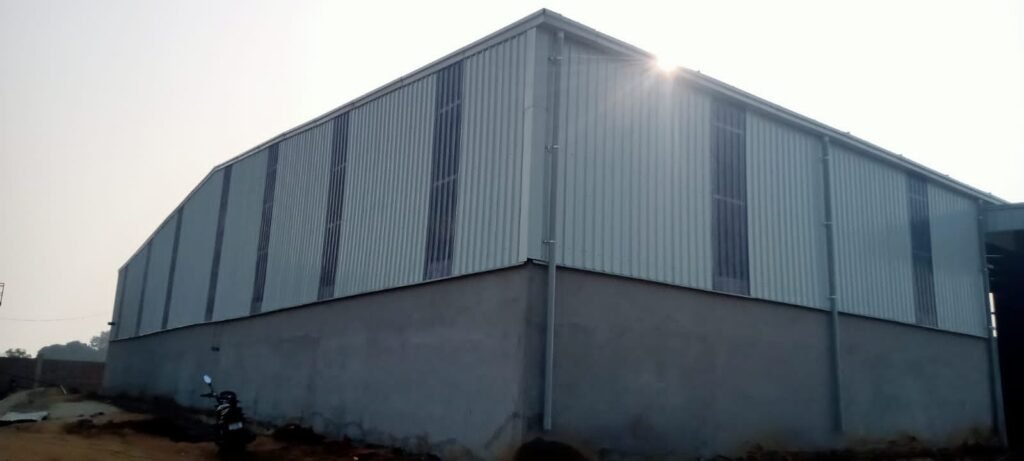
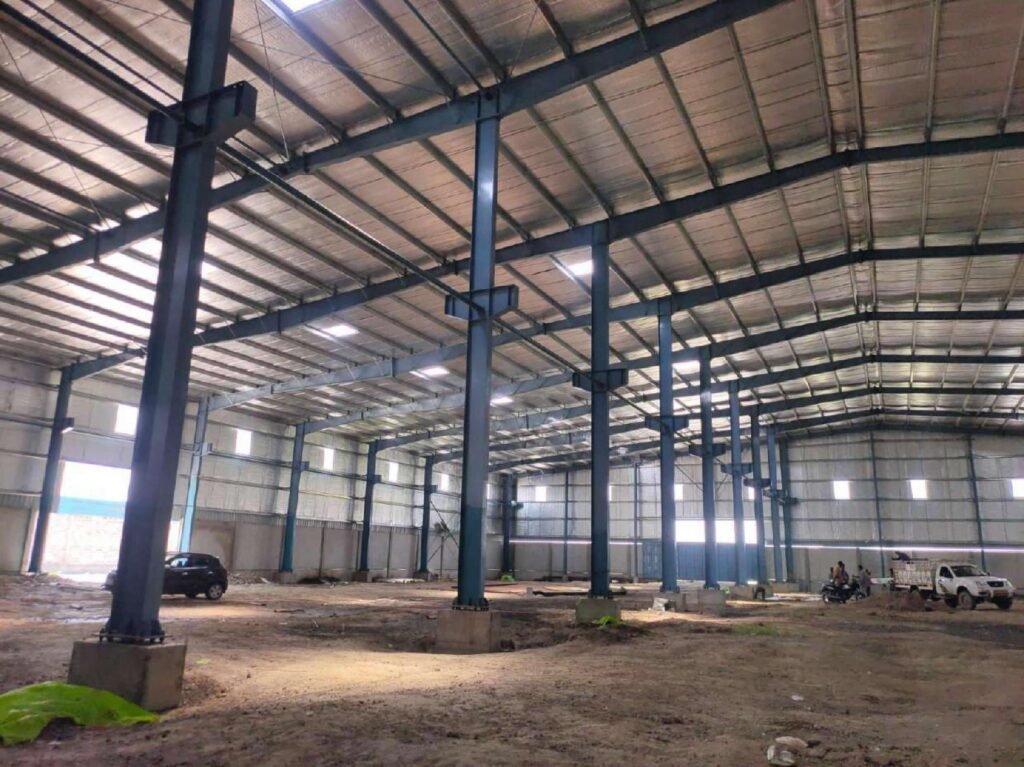

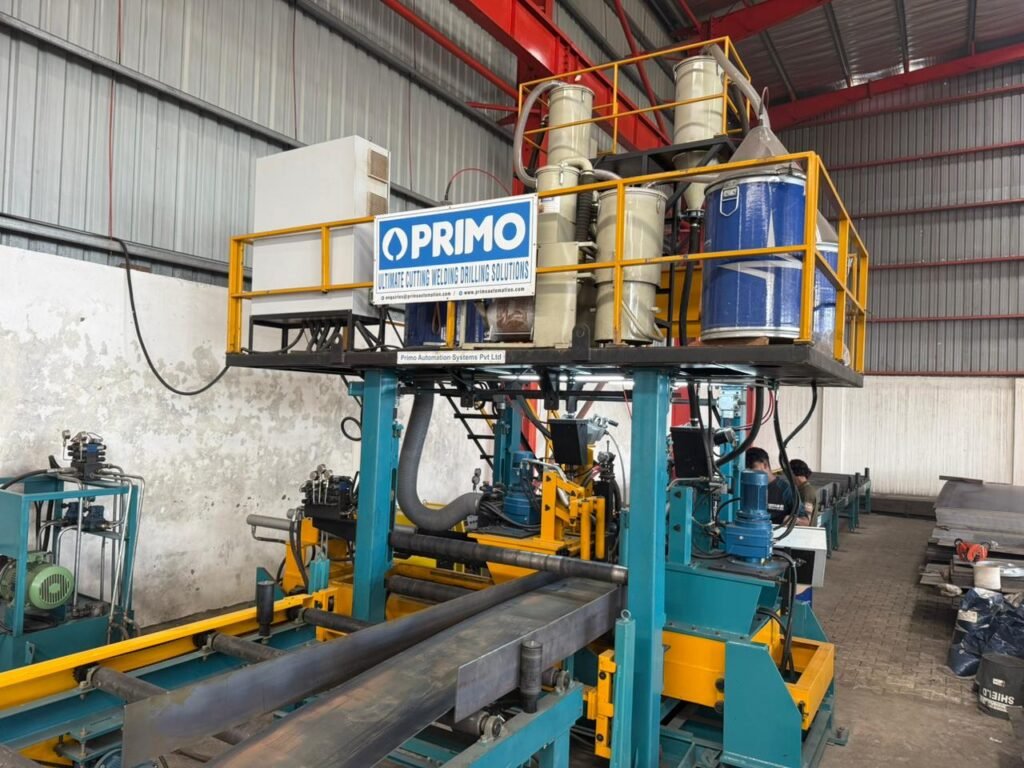
Storage demand and funding in 2026
Covered storage has been a bottleneck for Punjab's millers for several seasons. Procurement for the 2026-27 season opened on 1 October 2026, and news reports say the Punjab Chief Minister wrote to the Centre on 2 October 2026 about a persistent shortage of FCI storage space, with wheat still held in rice mills and mandi yards. More covered space at the mill means you can take in paddy without waiting for lifting.
Godowns that FCI guarantees to hire: PEG Phase-2
The Punjab State Warehousing Corporation has floated tenders for private godowns that FCI guarantees to hire for 10 years (Private Entrepreneurs Guarantee scheme, Phase-2). Locations in and around Bathinda district in its 2025-26 notices include Bathinda 70,000 MT, Talwandi Sabo/Raman 70,000 MT, Maur 50,000 MT, Bhucho 30,000 MT and Bhagta Bhai Ka 30,000 MT. A PEB godown helps a bidder meet the construction deadline. Check the current bid status on the GeM portal or pswc.in before you plan.
Agriculture Infrastructure Fund (AIF)
3% a year interest subvention on loans up to Rs 2 crore per project for up to 7 years, with CGTMSE cover on those loans. The official eligible list includes warehouses and silos, and for rice: hulling, milling, parboiling, drying and storage. Ask your bank whether new AIF loans are being sanctioned now. agriinfra.dac.gov.in
Collateral-free credit: CGTMSE
Micro and small units can get collateral-free loans with a CGTMSE guarantee of up to Rs 10 crore. How CGTMSE works for a shed.
Punjab Industrial Policy 2026
The Industrial & Business Development Policy 2026 (gazette 8 March 2026) offers new units a capital subsidy of up to 20% of eligible fixed capital investment, capped at Rs 10 crore. MSMEs need ZED Bronze certification. State subsidies compared.
Bank term loan for the shed
Banks fund factory buildings against a project report, approved drawings and a supplier quotation. We provide the drawings, steel weight and bill of quantities your bank asks for. MSME loan for a factory shed.
Scheme terms change. Confirm with your bank, the District Industries Centre or your CA before you apply.
Get a quotation for your Bathinda shed
Send your plot size, the building size you need, height, and whether it is a mill hall, a godown or both. We reply with a layout, steel weight and price.
Frequently asked questions
How can a rice mill or godown shed be ready in 60 days?
Because the steel is made in a factory while your foundations are cast. Once drawings are approved and the advance is paid, columns, rafters, purlins and roofing sheets are fabricated at our Mandi Gobindgarh plant; meanwhile your civil contractor builds the foundations to our anchor-bolt plan. Then the parts are delivered and bolted together on site. The 60-day target applies to standard single-storey sheds with foundations ready on time.
What is included in your price per sq ft?
Our current rate of about Rs 375-450 per sq ft is for the steel building: design, primary frames, purlins and girts, roof and wall sheeting, fasteners and erection. Civil works (foundations, plinth, flooring, ramps), electrical work, approvals and GST are separate. The final rate depends on span, height, loads and options such as cranes or insulated roofing.
Can the shed be extended later when the mill grows?
Yes. PEB frames are bolted, so extra bays can be added at the end walls later. Tell us at the design stage if you plan to expand, and we design the end frames and foundations for it.
Which design codes do you follow?
Steel buildings are designed to Indian codes: IS 800:2007 for steel design, IS 875 (Parts 1-3) for dead, imposed and wind loads, and IS 1893 (Part 1):2016 for earthquake loads. Structural steel is specified to IS 2062.
Which rice mills have you worked with near Bathinda?
We have served 11 rice mills in Punjab since 2025. Near Bathinda these include Sangam Rice Mills (Barnala-Raikot Road, Mehal Kalan); Shanker Rice Mills (Naiwala Road, Barnala). We can share photos of similar sheds with your enquiry.
How far is your plant from Bathinda?
Our plant in Mandi Gobindgarh is about 176 km from Bathinda by road. The usual route is via Amloh, Nabha, Sangrur and the Barnala stretch of NH-7, through Rampura Phul and Bhucho Mandi, about 3 hours by car.
Which areas of Bathinda district do you supply rice mill and godown sheds to?
We can supply sheds anywhere in the district, including the grain-market towns of Goniana, Talwandi Sabo, Rampura Phul, Rama, Maur, Bhucho, Sangat and Nathana, and the industrial areas in Bathinda city.
Bathinda summers are very hot. How do you keep a godown cooler?
Bathinda has a semi-arid climate, and June temperatures can cross 47°C. We offer pre-insulated roofing sheets (Coolshyne / PI Coolshield) and ridge ventilation monitors, which help reduce heat inside the shed. Full side cladding also helps keep out dust during dust storms.
Does Bathinda's soil need special foundation design?
Soils in the district are mostly sandy, with salinity, alkalinity and kankar layers in places, according to the Central Ground Water Board. We design foundations from your site's soil test report, and we recommend testing the water used for concrete, as groundwater in many parts is saline.